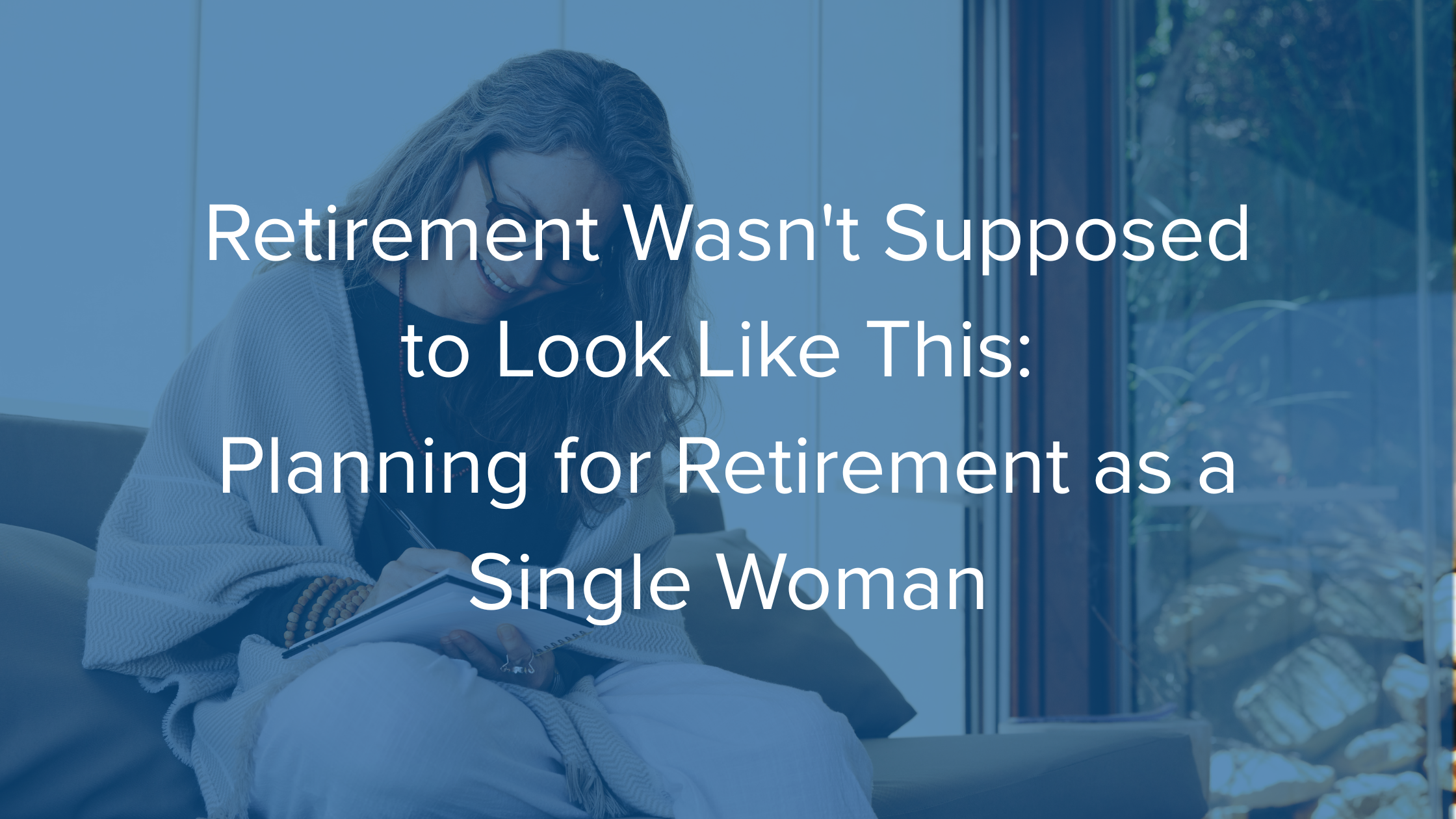
Retirement Wasn’t Supposed to Look Like This: Planning for Retirement as a Single Woman
By Scott Searles | June 5, 2026
For many women, retirement does not unfold exactly as expected.
Some enter retirement after the loss of a spouse. Others experience divorce later in life. Some simply find themselves approaching retirement on their own after years of building a career, raising a family, or caring for loved ones.
Whatever the reason, being single in retirement can create unique financial challenges—and opportunities.
The good news is that retirement planning is not about where life has taken you. It is about creating a strategy for where you want to go next.
Why Retirement Can Be Different for Single Women
Single women often face retirement planning decisions without the benefit of a second income, a second Social Security benefit, or another person helping shoulder future financial risks.
At the same time, women frequently live longer than men, which means retirement savings may need to last longer.
That combination can make planning especially important.
Questions often include:
- Will my savings last?
- When should I claim Social Security?
- What happens if healthcare costs increase?
- How much income can I safely spend?
- Do I need long-term care planning?
These concerns are common and deserve thoughtful attention.
Risk #1: A Longer Retirement
One of the biggest financial challenges facing many women is longevity.
Living longer is certainly something to celebrate.
Financially, however, it means retirement assets may need to support income for 25 to 35 years or longer.
That makes planning for inflation, healthcare, and sustainable withdrawals especially important.
A retirement strategy should not only address today’s expenses but also future needs that may emerge decades down the road.
Risk #2: Healthcare Costs
Healthcare is often one of the largest expenses retirees face.
For single women, there may be fewer financial resources available to absorb unexpected medical costs or long-term care needs.
While no one can predict future healthcare expenses, planning ahead may provide greater flexibility and peace of mind.
Risk #3: Social Security Decisions
Social Security plays an important role in many retirement income plans.
Single women who are divorced or widowed may have additional planning opportunities available through spousal or survivor benefits.
Because claiming decisions can affect lifetime income, understanding available options may be valuable.
A decision made today can have implications for years to come.
Risk #4: Taxes Don’t Retire
Many retirees are surprised to learn that taxes continue long after their careers end.
Required Minimum Distributions, retirement account withdrawals, capital gains, and Social Security taxation can all affect retirement income.
For women who eventually file taxes as single individuals, future tax brackets may become an important planning consideration.
A tax-aware retirement income strategy may help improve long-term flexibility.
Risk #5: Doing It Alone
Perhaps the most overlooked challenge is simply being the sole decision-maker.
Financial decisions that were once shared now fall on one person.
Investment decisions.
Healthcare decisions.
Income decisions.
Estate planning decisions.
That does not mean a woman has to navigate retirement alone. It simply means having trusted professionals and a thoughtful plan may become even more valuable.
Why This Matters
Retirement planning is about more than investments.
It is about creating confidence in the face of uncertainty.
For single women, that often means building a strategy that addresses income, healthcare, taxes, longevity, and legacy planning together rather than separately.
While every retirement journey is different, one principle remains constant:
The more intentional the planning, the greater the potential flexibility when life changes.
At Skybox Financial Group, we help women evaluate the financial decisions that often shape long-term retirement success, with a focus on tax efficiency, income planning, and preparing for life’s transitions.
Frequently Asked Questions
Is retirement harder for single women?
Retirement planning can present unique challenges for single women, particularly when it comes to longevity, healthcare costs, and relying on a single source of income. Thoughtful planning may help address these concerns.
Can divorced women receive Social Security benefits from a former spouse?
In certain situations, divorced individuals may be eligible for benefits based on a former spouse’s earnings record. Eligibility rules apply and should be reviewed carefully.
How should single women plan for healthcare costs?
Healthcare planning often includes evaluating Medicare options, budgeting for future expenses, and considering potential long-term care needs.
How much money does a single woman need to retire?
The answer depends on lifestyle goals, income needs, healthcare considerations, and many other factors. Retirement planning should be tailored to individual circumstances.
What is the biggest financial risk for single women in retirement?
For many women, longevity risk—the possibility of outliving retirement assets—is one of the most significant planning considerations.
Ready to Build a More Tax-Efficient Retirement Strategy?
Whether you’re approaching retirement, navigating a major life transition, or simply looking for greater clarity about your financial future, having a proactive strategy may help you make more informed decisions.
Schedule a complimentary 15-Minute Strategic Phone Call with Scott Searles to discuss your questions and explore potential planning opportunities.
Schedule Online
Call Our Office
440-238-6983
References
DISCLOSURE
The information provided in this article is for general informational and educational purposes only and should not be construed as personalized investment, tax, or legal advice. Reading this material does not create an advisory relationship with Skybox Financial Group, LLC.
Investment advisory services are offered through Skybox Financial Group, LLC, an Ohio-registered investment adviser. Registration does not imply a certain level of skill or training. Advisory services are only offered to clients or prospective clients where Skybox Financial Group and its representatives are properly licensed or exempt from licensure. Insurance service provided by Skybox Risk Management, LLC.
All investments involve risk, including the possible loss of principal. Past performance is not indicative of future results. Any references to market performance, investment strategies, or financial planning concepts are provided for illustrative purposes only and may not be appropriate for your individual situation.
Before implementing any strategy discussed, you should consult with a qualified financial professional to determine its suitability based on your specific financial circumstances and objectives.